

AdobeStock
Key Points
- The FAMU-FSU College of Engineering, in partnership with Florida A&M University, is establishing the Center for Quantum Science and Engineering, slated to open in spring 2026 at the Engineering Village at Innovation Park in Tallahassee, Florida.
- The center will support interdisciplinary research across fields including physics, materials science, computer science and engineering, with access to an IBM quantum computer and dedicated labs for nanofabrication and quantum chip design.
- Co-directors Bayaner Arigong and Wei Guo each received $5 million NSF ExpandQISE Track II grants—two of only five such awards made nationally at that funding level.
- The center is designed to address a documented global talent gap, with McKinsey & Company projecting a need for more than 250,000 quantum professionals worldwide by 2030.
- A central part of its mission is broadening participation in quantum science, with targeted outreach and mentorship for multicultural student groups, supporting both FAMU’s R1 research aspirations and Florida’s growing role in the quantum technology sector.
The FAMU-FSU College of Engineering is partnering with Florida A&M University to establish the Center for Quantum Science and Engineering, scheduled to open in spring 2026.
Located in the Engineering Village at Innovation Park in Tallahassee, the center will serve as a hub for interdisciplinary research and workforce training in one of the fastest-growing areas of science and technology.

‘A Pivotal Moment’ for the College and the Region
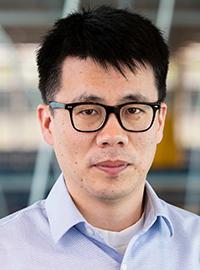
“The launch of the Center for Quantum Science and Engineering marks a pivotal moment for our college and for the entire region,” said Suvranu De, dean of the FAMU-FSU College of Engineering. “This new center will serve as a nexus for interdisciplinary collaboration, fueled by significant investment by NSF to expand quantum research capacity at R2 institutions. It will complement FSU’s Quantum Initiative, drive innovation, and prepare our students to lead in the rapidly advancing field of quantum technologies.”
The center’s co-directors, Bayaner Arigong, an associate professor in electrical and computer engineering, and Wei Guo, a professor in mechanical and aerospace engineering, will lead a facility designed to unite faculty and researchers across disciplines. Research areas will span physics, chemistry, materials science, computer science, advanced fabrication, mathematics, pharmacy, agriculture, business, medical sciences and engineering.
Both Arigong and Guo previously secured $5 million grants each through NSF’s Expanding Capacity in Quantum Information Science and Engineering (ExpandQISE) program, two of only five Track II awards made nationwide at that funding level, according to the college.
State-of-the-Art Labs and IBM Quantum Access
The center’s facilities will include experimental labs for nanofabrication, low-temperature characterization, quantum chip design and microelectronic assembly, supported by an IBM quantum computer and other industry partnerships.
“Quantum science and engineering are advancing at an extraordinary pace, so having a dedicated center allows us to share expertise in physics, engineering and materials science to tackle some of the most challenging problems in the field,” Arigong said.
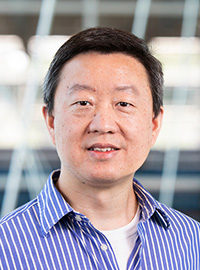
Those resources will give students hands-on experience in quantum research while building skills directly relevant to careers in quantum technology, a field facing a documented talent shortage. According to McKinsey & Company, more than 250,000 new quantum professionals will be needed globally by 2030, with only one qualified candidate available for every three specialized quantum positions today.
“The facility will help attract new faculty, industry partnerships and federally funded research,” Arigong said. “This creates a rich training environment that prepares our students for careers in the rapidly growing quantum workforce.”
Research Priorities and Faculty Recruitment
Plans are underway to recruit faculty specializing in quantum computing, quantum devices, sensing and applications, with the aim of securing major research grants and strengthening educational programming.
“Quantum science represents one of the most transformative frontiers in modern engineering,” said Guo. “Our research group focuses on using quantum fluids and solids to advance quantum information science and engineering. The new Center for Quantum Science and Engineering will provide the collaborative environment and resources needed to accelerate breakthroughs in these areas and to train the next generation of quantum engineers.”
Key objectives for the center include forming research teams across departments, establishing sustainable industry partnerships, promoting technology transfer and entrepreneurship, and building a self-sustaining innovation ecosystem.
Broadening Participation in Quantum Science
Inclusion is a central pillar of the center’s mission.
“One important aspect of the center is its mission to broaden participation in quantum science, particularly among multicultural student groups,” Guo said. “By creating mentorship networks, outreach programs, and pathways into advanced research, we hope to cultivate the next generation of these leaders in the quantum field.”
By expanding quantum computing capabilities, the center is also positioned to strengthen FAMU’s research profile as a recognized R2 institution and nationally prominent HBCU working toward R1 research status. The center’s mission closely aligns with FAMU’s strategic vision for research excellence and graduate training, extending the university’s impact across Florida and the nation.
The center became a reality with the support of FAMU President Marva Johnson, Provost Allyson Watson, who signed the approval, and Vice President Charles Weatherford.
“The Center for Quantum Science and Engineering is poised to position FAMU at the forefront of quantum research, education and innovation,” Guo said, “empowering the next generation of scientists and engineers for years to come.”
Editor’s Note: This article was edited with a custom prompt for Claude Sonnet 4.6, an AI assistant created by Anthropic. The AI optimized the article for SEO discoverability, improved clarity, structure and readability while preserving the original reporting and factual content. All information and viewpoints remain those of the author and publication. This article was edited and fact-checked by college staff before being published. This disclosure is part of our commitment to transparency in our editorial process. Last edited: 02/25/2026.
RELATED ARTICLES
New Path to Quantum Computing: Research Advances Trapped Electron Quantum Bits
Year of Quantum: FSU and Engineering Leading Advances in Quantum Technology
FAMU-FSU College of Engineering Emerges as a Quantum Research and Education Hub
FAQs
What is the FAMU-FSU Center for Quantum Science and Engineering?
The Center for Quantum Science and Engineering is a new interdisciplinary research and workforce training facility being established through a partnership between the FAMU-FSU College of Engineering and Florida A&M University. Located at the Engineering Village at Innovation Park in Tallahassee, Florida, the center is scheduled to open in spring 2026. It will support research across quantum computing, quantum devices, sensing, materials science and related fields, and is designed to train students for careers in the rapidly growing quantum technology industry.
Who is leading the new quantum research center at FAMU-FSU?
The center will be co-directed by Bayaner Arigong, an associate professor of electrical and computer engineering, and Wei Guo, a professor of mechanical and aerospace engineering, both at the FAMU-FSU College of Engineering. Each director previously received a $5 million grant through the National Science Foundation's Expanding Capacity in Quantum Information Science and Engineering (ExpandQISE) program—among only five Track II awards made at that funding level nationwide.
Why is a quantum engineering center important for FAMU and Florida?
FAMU is a nationally recognized historically Black college and university (HBCU) currently working toward R1 research status. The new center is designed to strengthen FAMU's research profile, align with its strategic vision for graduate training and research excellence, and expand Florida's capacity in quantum science. With McKinsey & Company estimating that more than 250,000 quantum professionals will be needed globally by 2030—and only one qualified candidate available for every three specialized positions today—the center addresses a documented workforce gap at both the state and national level.
How does the quantum center support diversity and inclusion in STEM?
Broadening participation in quantum science is a stated core mission of the center. Programming will include mentorship networks, community outreach and structured pathways into advanced research for multicultural student groups. By pairing these efforts with access to cutting-edge quantum research infrastructure, the center aims to increase representation in a field where diversity has historically lagged behind broader STEM disciplines.